Burn: cool, protect and alert
Burning and first aid: understands how to cool, protect and recognize alert situations. A comic sheet to prepare the practice.
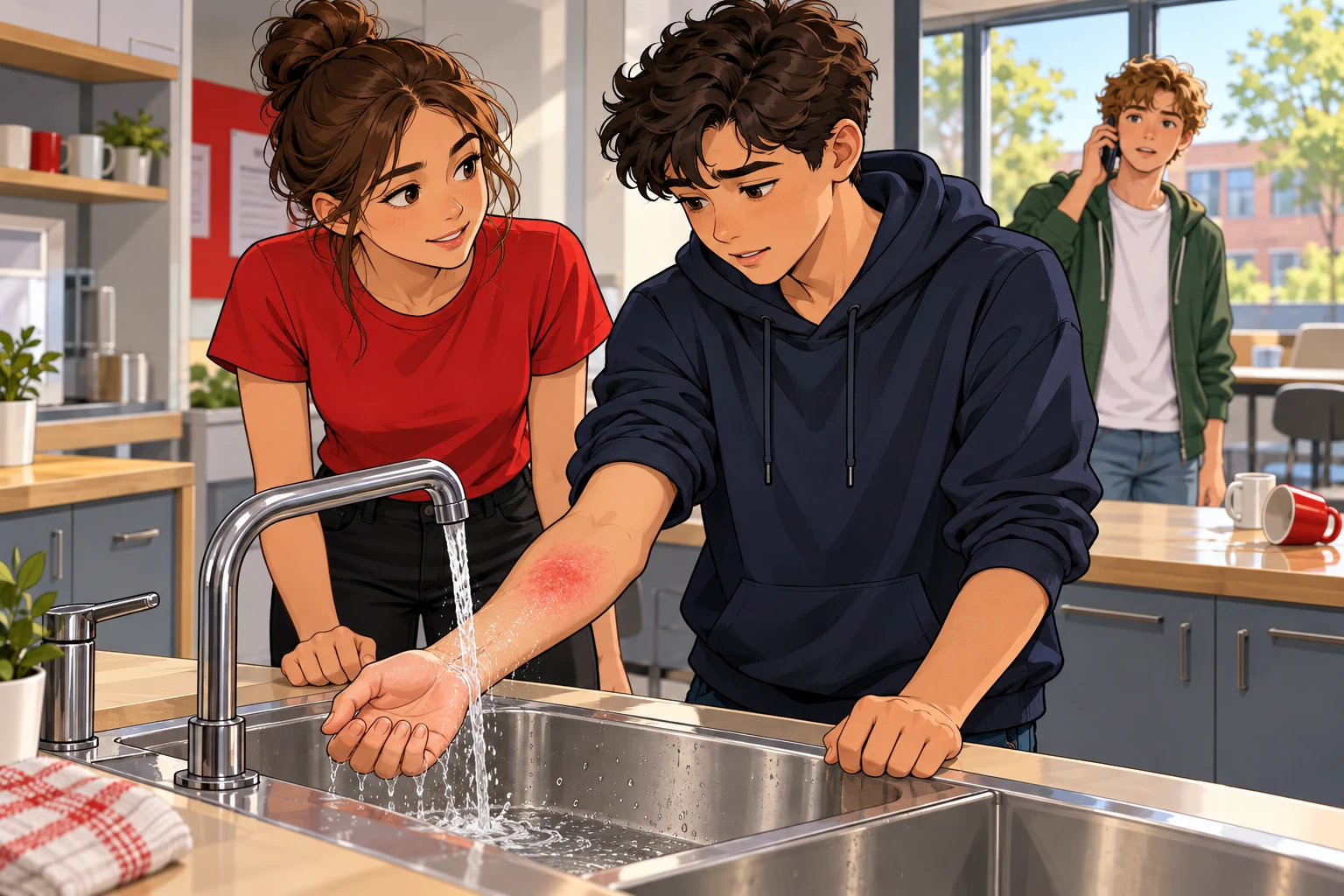
Cool the area, keep the person warm.
Heat can continue to damage the skin after the accident. For a limited thermal burn, quickly pour cool or temperate water, not iced, into the area.
Aims at least 10 minutes, ideally 20 minutes if the person tolerates it. Never delay an urgent call to complete this cooling.
In the end, you'll be able to choose the first gestures.
Stop exposure
Keep the person away from the heat if it does not expose you. A burn can come from a hot liquid, from an object, from flames, from a chemical, from electricity or from the sun. Each cause may require different precautions.
Pain is not enough
Redness, blisters, or whitish skin, dark or insensitive give clues. You don't need to determine a degree of burn to help. Also observe the extent, location, cause and general condition.
Identify an emergency
Call 144 for extensive or deep burns, facial or respiratory damage, difficulty breathing, severe malaise or electric burn. Follow the instructions and watch the person.
Four gestures for a limited thermal burn.
- 1
Ending contact with heat
Keep the source out of the way if you can do it safely. Requesting assistance from an available adult. Never go back to a smoky area to look for equipment.
- 2
Cool locally
Use fresh or temperate, non-ice running water: at least 10 minutes, ideally 20 minutes if well tolerated. The rest of the body remains dry and warm. For an extended burn or a fragile person, call 144 and adjust the cooling; do not put the whole body under cold water.
- 3
Respect skin
Gently remove close jewels and clothing that detach easily. Leave what sticks to the skin in place. Do not pierce the blisters or rub the lesion.
- 4
Protect and monitor
After cooling, protect if necessary with a clean, non-adhesive dressing, without tightening. A burn is not treated by compression as a hemorrhage. Reassure the person, monitor his condition and request medical advice according to the signs.
A burn may require a doctor without being an immediate distress.
Quickly seek medical advice if blisters appear, if the burn affects the hands, feet, joints or genitals, or if it affects a young child or a fragile person. If in doubt, ask for advice. Aggravation, fever or signs of infection after the accident also require medical advice.
Improvised remedies
At the time of first aid, do not put any ice, butter, toothpaste or oil on the burn. Do not apply a cream at random. Do not stick adhesively on damaged skin and do not pierce blisters.
Also monitor breathing
A rough voice, cough or difficulty breathing after a fire may indicate respiratory damage. Stay safe and call 144. A small visible burn does not exclude an emergency inside the body.
Chemical
Protect yourself from contact and projections. Carefully remove unadhesive contaminated clothing and rinse thoroughly with running water, avoiding spreading the product to another area. A dry powder visible on the skin must first be removed carefully without direct contact or dispersal before rinsing. Don't try to neutralize with another product. Call 145 (Tox Info Switzerland) for specific instructions and keep the package available without contamination. For a major burn, eye damage or distress, arrange immediately the medical aid to 144; continue rinsing according to instructions.
Electricity
Do not touch the person before removing the danger. Cut the current only if it can be done without risk. For a fallen cable or a high voltage installation, stay at a distance and wait for professionals. Call 144: a small mark can hide an internal or heart attack. Once the scene is safe, if the person does not respond and does not breathe normally, starts resuscitation and uses an available AED.
Sources and learning design
Protect yourself from contact and projections. Carefully remove unadhesive contaminated clothing and rinse thoroughly with running water, avoiding spreading the product to another area. A dry powder visible on the skin must first be removed carefully without direct contact or dispersal before rinsing. Don't try to neutralize with another product. Call 145 (Tox Info Switzerland) for specific instructions and keep the package available without contamination. For a major burn, eye damage or distress, arrange immediately the medical aid to 144; continue rinsing according to instructions.
Do not touch the person before removing the danger. Cut the current only if it can be done without risk. For a fallen cable or a high voltage installation, stay at a distance and wait for professionals. Call 144: a small mark can hide an internal or heart attack. Once the scene is safe, if the person does not respond and does not breathe normally, starts resuscitation and uses an available AED.
Situations and original illustration ESU Academy. References consulted on October 1, 2026: IFRC — first aid recommendations 2025, burns chapter, Hirslanden — burns, American Red Cross — Safety, Protection and Specific Situations et OFSP — chemicals and Tox Info Switzerland 145. The gestures will be repeated in practice framed; the test quiz does not issue official attestation.
Burns : les premiers gestesCapsule BD · ESU Academy
Observe. Understand. Prepare to act.
TRAINING VIDEO
Video disponible dans le parcours connecté.