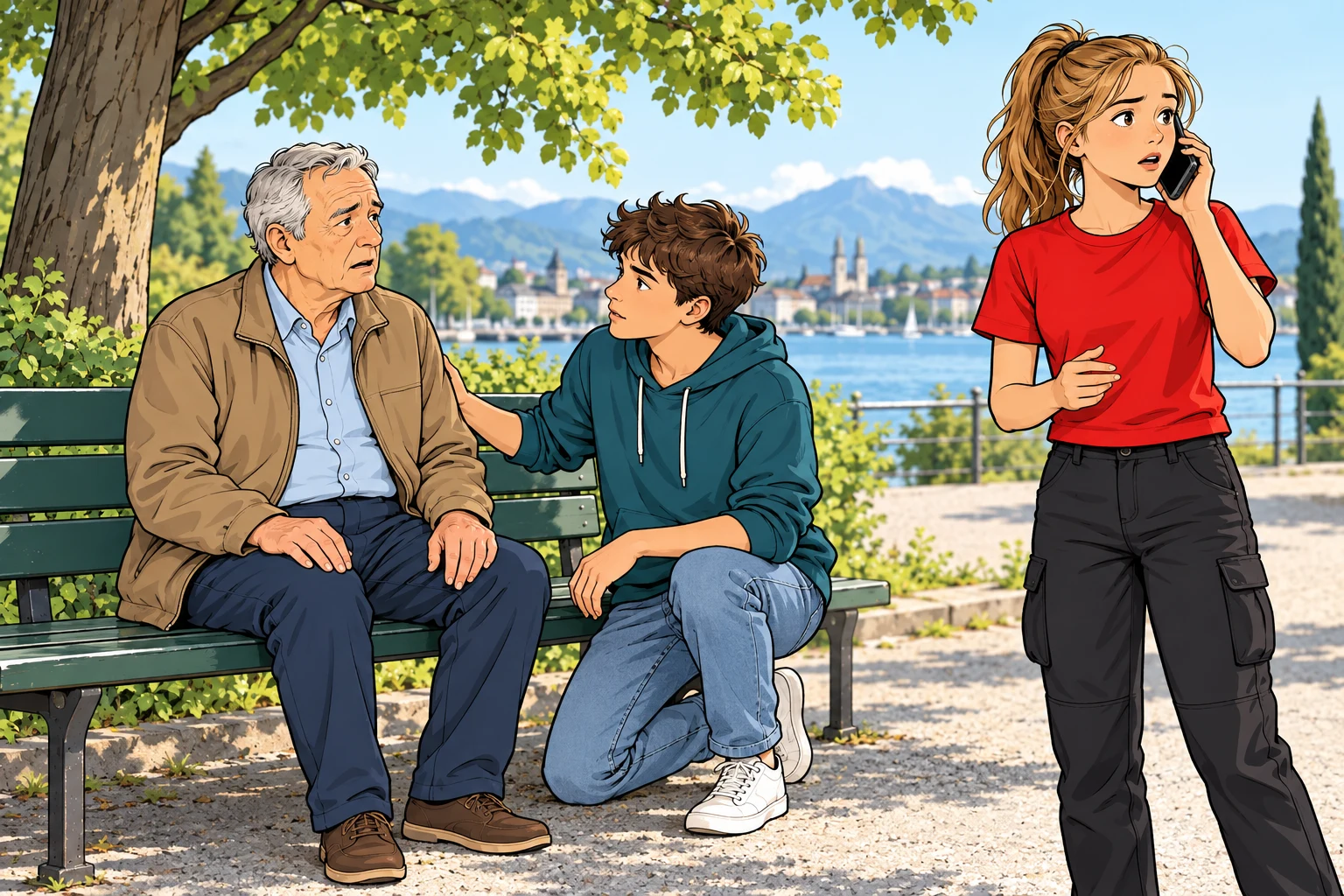
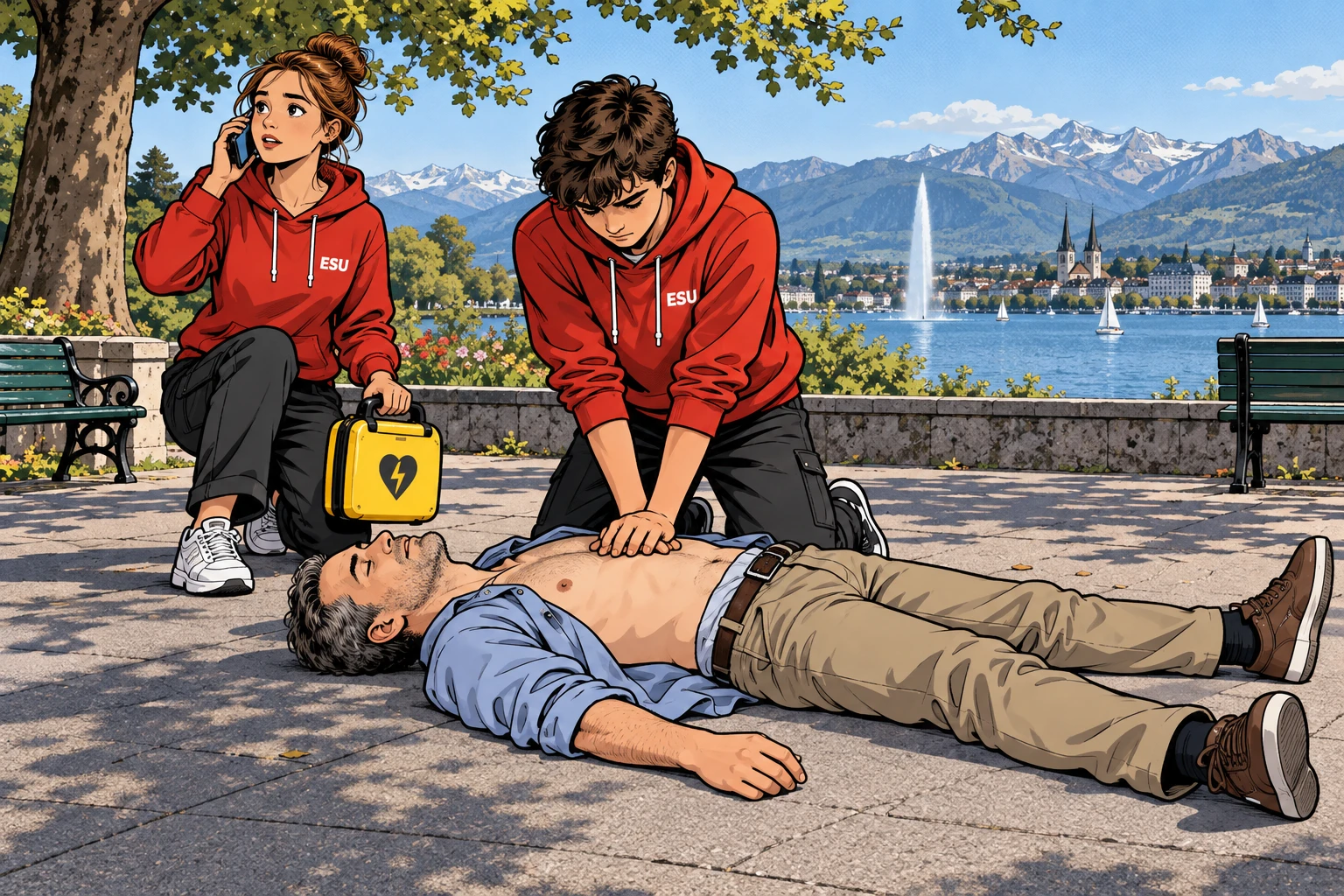
Checking breath: essential benchmarks
Check breathing: discovers useful observations and signs of abnormal breathing. Prepare your decisions with ESU Academy.
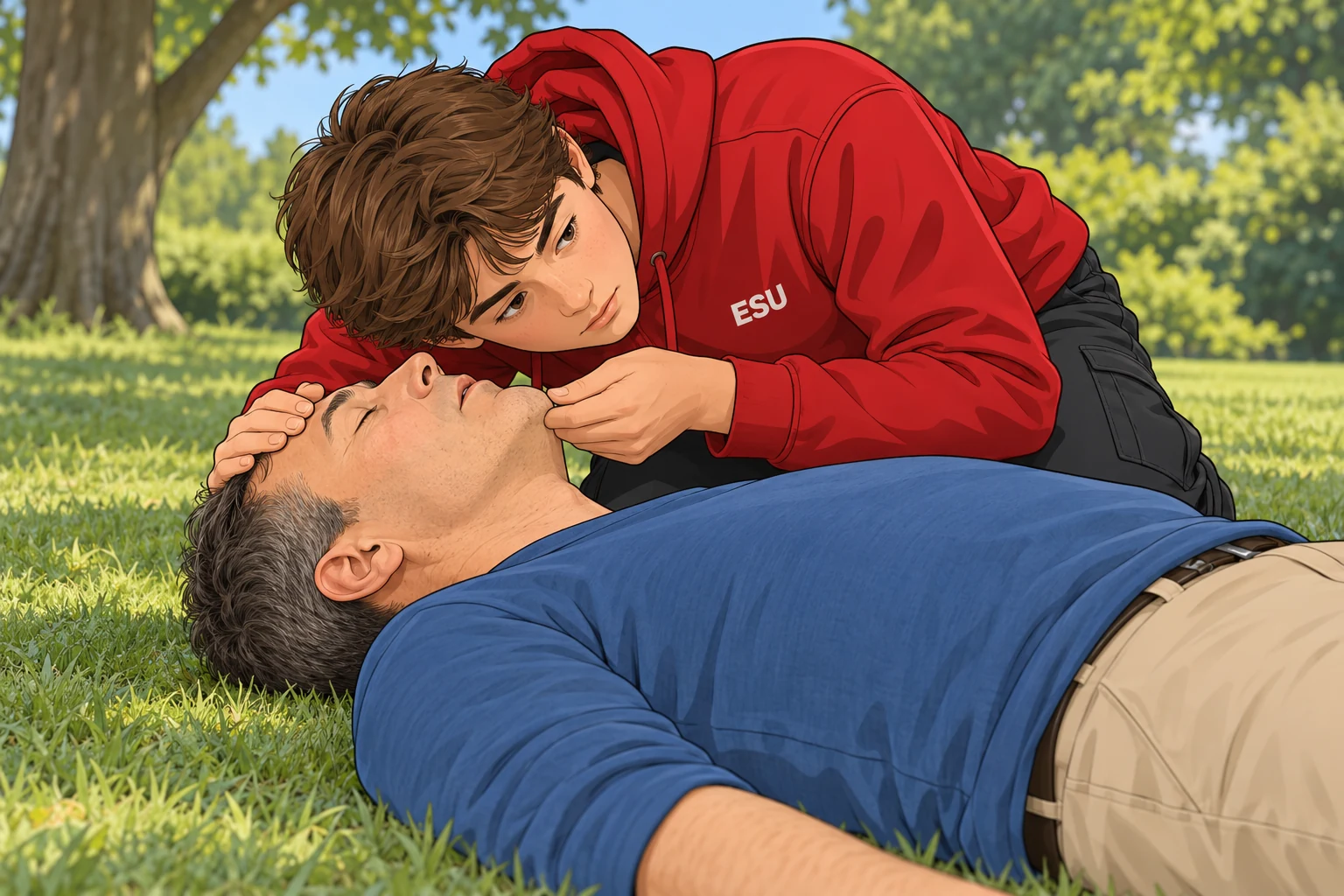
Prepare to check breathing.
The person is unresponsive. Call for help. With the person lying on their back, gently tilt their head back with one hand on the forehead and lift their chin with the fingers of your other hand.
Bring your face close to their mouth and nose while looking towards their chest. Do not press on the soft tissues under the chin.
Three observations, one check.
Watch
Does the chest rise and fall? Look for regular movements.
Listen
Can you hear breathing? A few isolated sounds are not enough to establish that the person is breathing normally.
Feel
Can you feel their breath on your cheek? Combine this observation with chest movements and breathing sounds.
Inspired, the diaphragm and chest muscles contribute to air entry into the lungs. Upon expiration, the air is released. The movement of the thorax and the breath give clues: a noise alone does not prove normal breathing.
Gasps are not normal breathing.
A person in cardiac arrest can still make rare, difficult, noisy or irregular inspirations. Don't take these breaths for a reassuring breath.
If she doesn't respond and doesn't breathe normally — or if you have a doubt — alert 144, ask for an AED and start resuscitation. Follow the instructions from the emergency dispatch centre.
Protect and monitor.
If she does not respond but breathes normally, alert 144, place her in a safety lateral position and continue to monitor her breathing.
Call for help and start CPR.
Call 144, start chest compressions and use the AED as soon as it is available. Occasional gasps must not delay your actions.
Sources and learning design
Inspired, the diaphragm and chest muscles contribute to air entry into the lungs. Upon expiration, the air is released. The movement of the thorax and the breath give clues: a noise alone does not prove normal breathing.
Original ESU Academy texts, exercises and layout. BD illustrations from module 3. Benchmarks: SRC — Directives 2025, Samaritans Switzerland et International Federation of the Red Cross — recommendations 2025. The gestures are trained in practice with the trainer.
Check breathingCapsule BD · ESU Academy
Observe. Understand. Prepare to act.
TRAINING VIDEO
Video disponible dans le parcours connecté.